Old House, Old Hardware: Skeleton Keys, Chest Keys, and Screens
The hardware in an old house tells a story, and a lot of it can still be saved, copied, or repaired.
October 16, 2026 · 4 min read
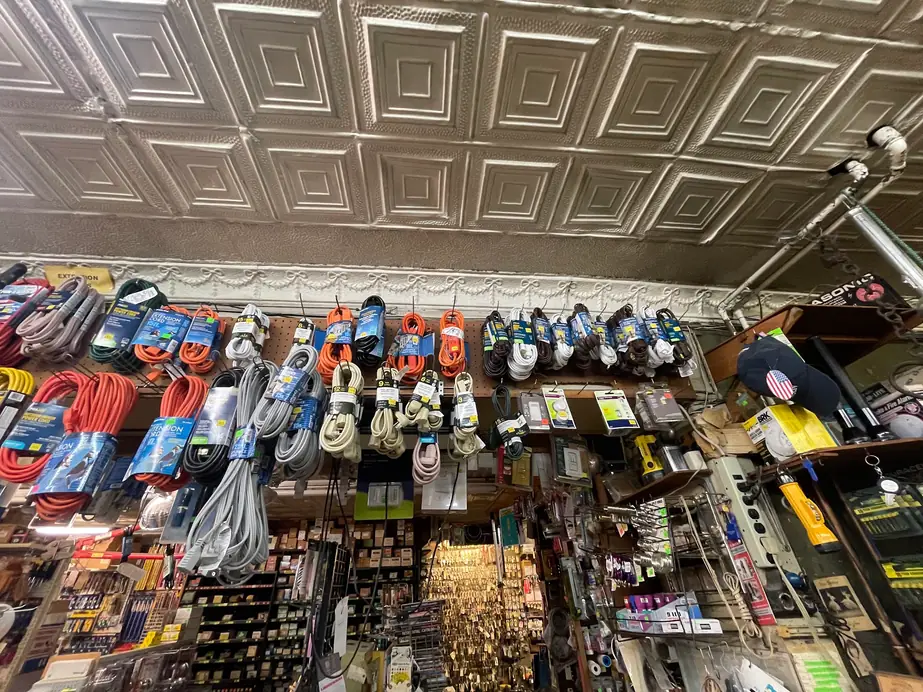
Walk through South Philadelphia and you pass hundreds of doors that were hung long before anyone talked about smart locks. Some of the hardware behind those doors is original, and some of it has been patched, painted over, and patched again. If you live in one of these homes, you've probably got a drawer with a few mystery keys in it, a screen door that sags, or a window screen that stopped fitting years ago.
Wilensky's has been on Passyunk Avenue since 1917, which is part of why this kind of question feels familiar to us. Our key duplications list includes antique keys, skeleton keys, and what our site calls an antique chest key, and our hardware side repairs screen doors and window screens. Here's a field guide to the things people bring in.
What a skeleton key really is
People use the phrase for any old-looking key, but a skeleton key has a specific meaning. Old warded locks work with fixed obstacles inside the lock called wards. A normal key for that lock has notches cut to clear the wards and a bit to push the bolt. A skeleton key is a key with most of the blade filed away, so it clears the wards of many different locks and still moves the bolt.
That also explains why those locks aren't very secure by modern standards: a simple warded lock can often be opened by keys that were never made for it. If you've got a door with an old warded or mortise lock that you love, we'd gladly talk through adding a modern deadbolt for security while keeping the original hardware as part of the look.
Mortise locks and old cylinders
Many older doors have a mortise lock, which is a rectangular body set into a pocket cut in the edge of the door. They're sturdy and often beautiful, and many can be rekeyed or fitted with a new cylinder so they work with a modern key. Others are best left as they are and supported by a second lock. What you have depends on the maker and the age.
Bring in whatever you can: the key, a photo of the lock face and the edge of the door, or the lock itself if it's been removed. We service brands like Corbin Russwin, Yale, Arrow, Segal, Marks, and American, a lot of them names that go back a long way, so there's a good chance we've handled something close to yours.
Copying an antique key
Old keys are tricky. Many are handmade or from a maker that no longer exists, there may be no blank on any shelf that fits, and the metal may be brittle or worn. We can duplicate almost any kind of key, including antique keys and skeleton keys, drawing on three generations of learning the skills, but we'll look at yours before we promise anything. Sometimes the right move is to make a new key to fit the lock rather than copy a fragile original.
The antique chest key
Chests, trunks, cabinets, and small boxes are another category. A key for a family trunk or a cedar chest from a grandparent's attic is often a small, simple warded key, and it can usually be matched by someone who has seen enough of them. If you have the chest, bring the lock plate or take a clear photo of it. If you only have the key and no lock, bring that. Old keys sometimes carry clues in their shape.
Screens, glass, and the small fixes that matter
Old houses also have old windows and doors, and rarely in standard sizes. A window screen that stopped fitting after the frame shifted, a screen door with a torn panel, a pane of glass that cracked in a cold snap: these are the daily repairs of an older home. We list screen door repair and window screen repair among our services, and in the shop we handle screen and glass replacement for windows and doors, cut glass to size, and do pipe cutting and threading.
The key to getting a good result is to measure carefully, or better yet bring the frame or sash itself. Old openings can be slightly out of square, so measuring from two or three spots avoids surprises. Bring the damaged piece if you can, and we'll match it.
A hardware store that says yes
One thing our customers say about us, and one thing we say about ourselves: when other hardware stores say sorry, they can't help you, we say yes to assisting with any hardware or tool search. For old houses, that matters. Odd hinges, a missing knob, a strange fastener, a part you've been hunting for. Bring it in.
We back what we sell, and we'll service anything we sell. We offer free estimates in person or over the phone on sales and installations, so it never costs you anything to ask what's possible.
Start with a photo and a visit
If you've got a door, a drawer of keys, or a sagging screen in an older home, start with a photo and a visit. Wilensky's Hardware & Locks is at 1113 E Passyunk Ave, Philadelphia, PA 19147, open Monday to Friday 9 to 6 and Saturday 9 to 5. Call (215) 468-4819, or look at our Key Duplications and Hardware pages first if you'd like to see what we carry and copy.
Wilensky's Hardware & Locks, (215) 468-4819
Call (215) 468-4819More articles
Why Some Keys Won't Copy at the Big-Box Kiosk
If you've ever carried a fresh copy home and watched it fail in the door, the problem is rarely you.
Rekey or Replace? Your Locks When You Move Into a South Philly Home
You don't know how many copies of the old keys are floating around, and that's the whole reason to do something about it.